
WHAT IS METAL BENDING AND HOW DOES IT WORK?
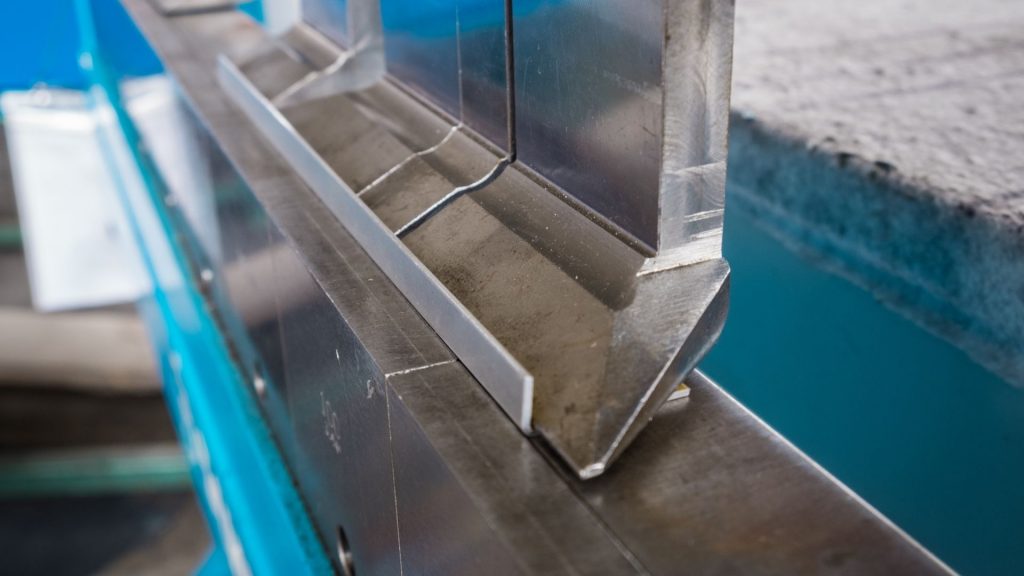
A press brake is a tool used to bend sheet metal and employs a punch and die to do so. Metal bending is a method by which metal can be deformed when applying force to the topic, causing it to bend at an angle and create the anticipated shape, which commonly results in it being in a ‘V’ or ‘U’ shape. Although press braking appears to be simple, maintaining accuracy throughout the process can be tough. Mechanical, pneumatic, hydraulic, and CNC press brakes are just a few examples of several types of press brakes that deliver varying degrees of force.
Mechanical :
Due to the design of this press brake, it is not appropriate for air bending. The two main advantages of a mechanical press brake are speed and precision; however, other press brakes, such as CNC press brakes, are safer and easier to use.
Pneumatic:
To bend the metal sheets, a compressor is required to deliver airpower. When less pressure is required, this sort of press brake is frequently utilised. Bending small metal pieces is also a good use for a pneumatic press brake.
Hydraulic:
Hydraulic press brakes are generally equipped with cutting-edge technology and are ideally suited for precision metal sheet bending, making them a popular choice for sheet metal bending.
Computer Numerically Controlled (CNC):
Salamander Fabrications has 4 CNC press brakes, including a 4.2-metre bed with a 180-tonne capacity. These machines generate extremely accurate results and can bed sheet metal work ranging in size from a few millimetres across to metres long portions on some of the larger machines.
Metal Bending Types
Air Bending
The workpiece comes into touch with the exterior edges of the die as well as the punch tip during this procedure. After that, the punch is driven through the top of the die into the V-shaped opening without hitting the V.
The sort of bending in which the least amount of contact is made is known as air bending. The material is only touched by the equipment at three points: the punch, tip, and die shoulders. You don’t require as much tonnage as you would if you used the coining approach because the tonnage doesn’t cause the bend.
Air bending is the most popular method of metal bending, and it’s easy to see why: it has numerous advantages. In comparison to bottom bending and coining, substantially less weight is necessary to bend because the punch tip does not need to be pushed over the metal surface.
Bottom Bending
The distinction between air bending and bottom bending is that the two have different radiuses. The punch and tie don’t make complete contact with the substance, and there isn’t enough tonnage to form an imprint on the metal, thus it’s not the same as coining. Bottom bending provides a number of advantages, including more precision and less spring back when utilising tooling, making it a safer option when compared to other metal bending processes.
Coining
Coining is a bending technique in which the punch and workpiece are pressed against the die. This results in a regulated angle with minimal spring back. This sort of bending necessitates greater tonnage than air bending or bottom bending.
The advantages of coining include the fact that, in order to create great outcomes, accuracy is required, which the coining process can give. When it comes to applying this strategy, it’s not only accurate, but it’s also simple to reproduce the outcomes. When utilising coining, spring back is also less prevalent, which means the metal is less likely to return to its former state.